
What Is Search Engine Optimization?
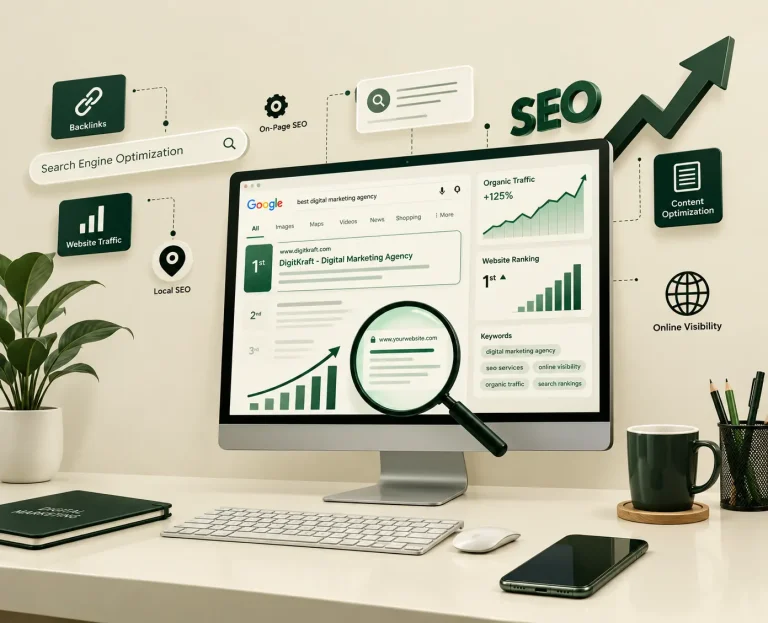
SEO (Search Engine Optimization) is the practice of optimizing the website so that its visibility can be increased on search engines such as Google and Bing. SEO helps in increasing the ranking of websites in search results and thereby attracting more organic visitors. SEO includes keyword analysis, creation of high quality content, optimization of webpages, increasing the website speed, acquiring quality backlinks, and providing good user experience. The purpose of SEO is to make the website easily understandable by the search engine as well as easy to access for the users.
How Does Search Engine Optimization Work?
Search Engine Optimization refers to a marketing technique that works through making websites visible in the search engines and allowing users to access relevant information online. Search engines, like Google, utilize automation to find, analyze, and rank websites according to their relevance and usefulness. First, keyword research is performed in order to understand the terms and phrases used by customers to look for certain services or products. Then, keywords are inserted into the content, heading, title, and description of each page. Website optimization is another step in the SEO process and includes enhancing the quality of the content, website speed, mobile responsiveness, internal links, etc. Technical SEO is responsible for crawling and indexing the pages of a website by search engines. Content creation is one of the key activities within the SEO strategy. Relevant and useful content will answer the questions of the users and meet their needs. Moreover, getting quality backlinks from other sites increases the credibility and authority of the site. Next, search engines analyze a variety of factors to decide on the most relevant pages to show. The performance of the website is constantly monitored using Google Search Console and Google Analytics. Thus, by constant analysis and optimization, one can generate organic traffic, increase online presence, find customers and ensure long-term business development. However, SEO is a long-term process and does not guarantee high rankings.
SEO Faces That Make Digital Success Possible
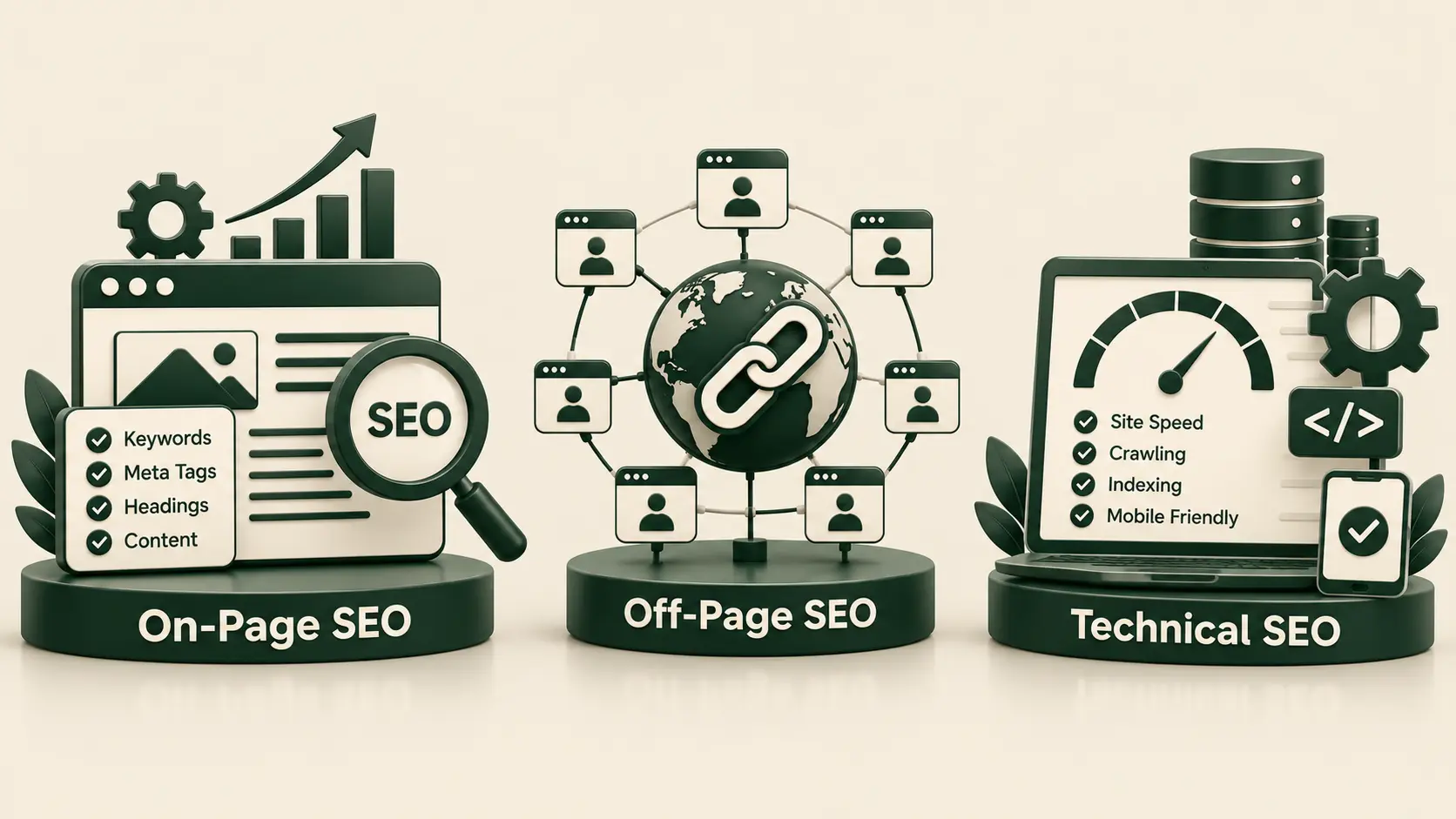
What Is On - Page SEO?
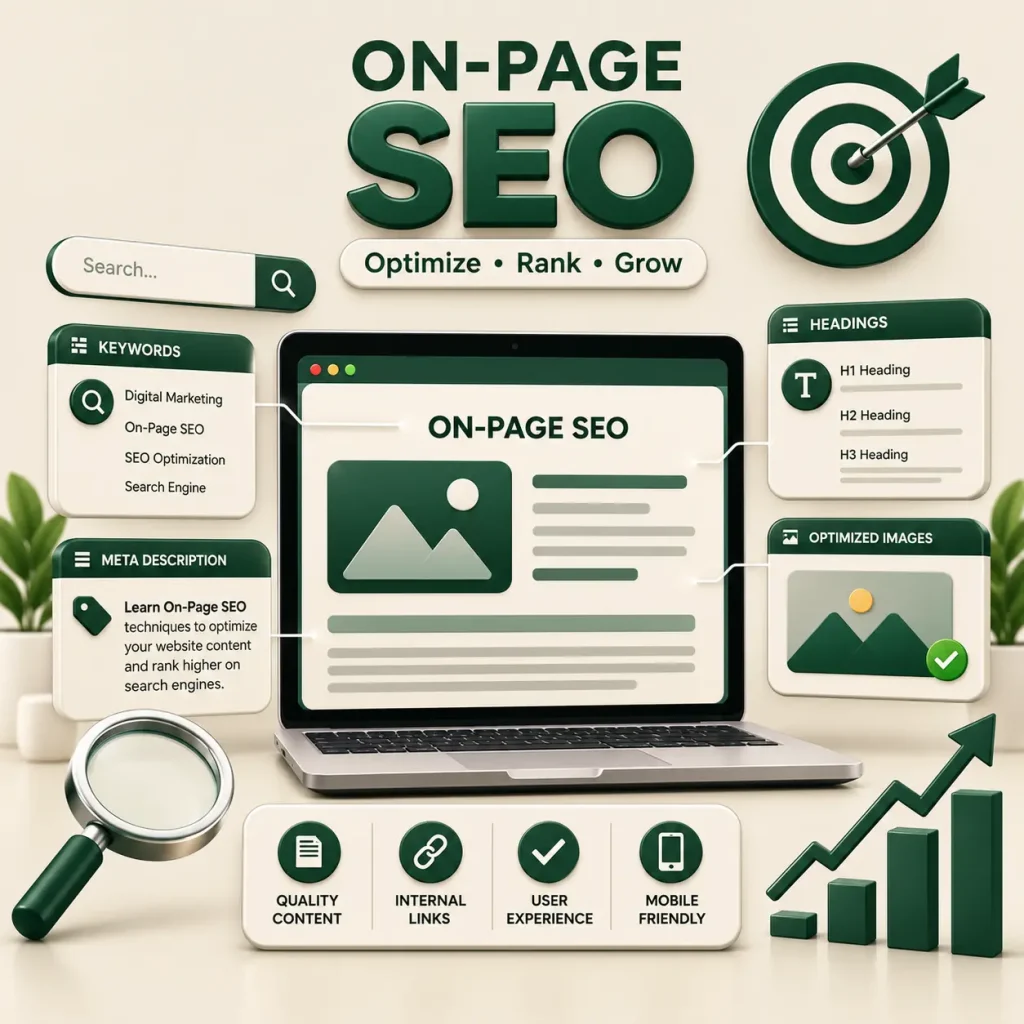
On-Page SEO refers to the optimization of a web page in order to increase its visibility in search engines results as well as the usability of its content. The optimization involves the use of various aspects which can be directly controlled by website developers in order to help search engines know what the page is all about. This may include optimization of titles, meta description, headings, URL, images, and internal links to the web page content using appropriate keywords. High quality and informative content creation is also very essential when it comes to On-Page SEO. The optimization of images and mobile friendliness is another aspect of On-Page SEO. The major goal of On-Page SEO is to ensure that each of the webpages become relevant to the search queries of visitors as well as making it easy for search engines to understand its contents.
Why is On - Page SEO important for websites?
On-Page SEO is one of the factors that help increase visibility of a site on search engines, improve content quality and enhance user experience. On-Page SEO makes it possible for the search engines to understand what kind of information a webpage contains and how related it is to the searches of users. Optimizing various website features, including keywords, headings, page titles, meta description, images and internal links, can help businesses increase the relevancy of their content. Another benefit of having a properly optimized website is that it will provide its users with all the necessary information and help them browse through its pages easily. It will also help companies reach the right target audience since they will be able to connect their websites to what people are looking for.
What Is Off - Page SEO?
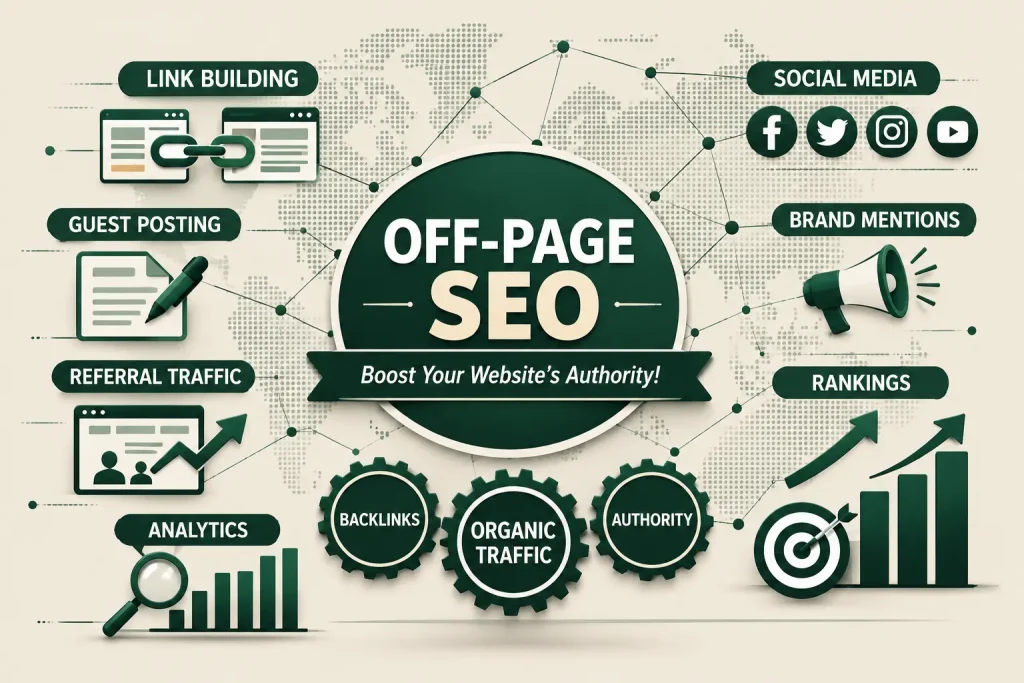
Off-Page SEO is the activity to enhance the reputation, authority, and visibility of the website through activities done off-page. This involves increasing the reputation and credibility of the website across the web so that the search engines can know that this website is an authentic site of useful and reliable information. Off-Page SEO is quite different from On-Page SEO because Off-Page SEO includes activities like quality backlinks, brand mentions, guest posting, digital PR, social media outreach, and business listing that will contribute towards the growth of online reputation of the website. The link building technique is very crucial for Off-Page SEO where other websites will be linked to your website. But it should be remembered that it is not the quantity of the backlinks but the quality and relevance of the backlinks that actually matter here. Effective Off-Page SEO strategies benefit the business through the enhanced online reputation, wider audience reach, referral traffic generation, etc.
What are the main techniques used in Off - Page SEO?
Off-Page SEO involves methods that help make a website more trusted, more well-known and more visible outside of its own pages. These methods focus on making a website more trustworthy getting links from other websites and making a strong presence online. By making connections with other websites and online places businesses can become more believable and reach more people. Some of the methods used in Off-Page SEO include:
1. Link Building: Getting good links from websites that are trusted and connected to the topic to make a website stronger.
2. Guest Posting: Writing articles for other websites to reach new people and get good links.
3. Social Media Marketing: Sharing website content on media to make more people know the brand get more interaction and have more people see the content.
4. Influencer Marketing: Working with people who have a lot of followers and create content to show the brand to people.
5. Digital PR: Sharing stories, news and expert ideas through places to make the brand more trusted.
6. Local Business Listings: Making sure business profiles are correct, on directories to get more local attention.
7. Brand Mentions: Getting more people to talk about the brand online to make it more known.
8. Community Engagement: Joining online groups by giving helpful answers and sharing useful information.
What Is Technical SEO?
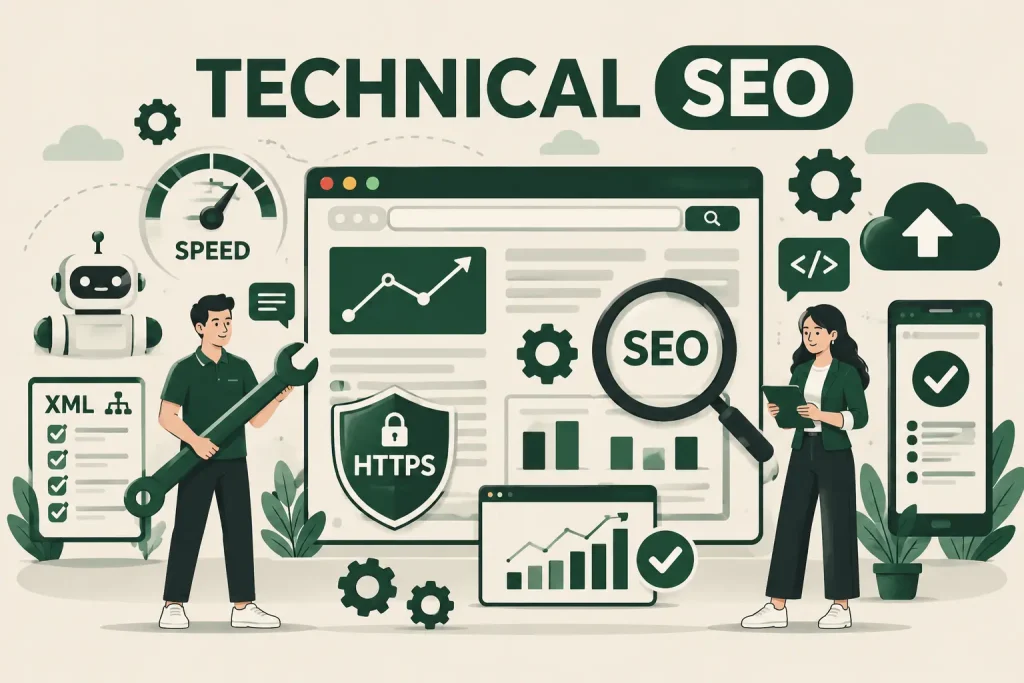
Technical SEO is about making sure a website works well behind the scenes so search engines can find, read and understand its pages. It’s not about content or keywords. It’s about the side—things that happen under the hood.
This includes making sure the website loads fast works great on phones and has a clean structure. Good URL names, XML sitemaps and properly set robots.txt files are all part of it. Security matters too—using HTTPS helps build trust with both users and search engines.
Fixing links avoiding duplicate content and helping search engines crawl the site easily are also key. Adding data helps search engines see what each page is about which can lead to better results in search.
When a website is technically strong visitors have an experience. Search engines can find the pages more easily. Regular technical checkups help catch problems before they get worse and keep the site healthy, over time.
Key Elements of Technical SEO
1. Website Speed: Makes pages load faster and work better.
2. Mobile-Friendliness: Makes websites work well on every device.
3. XML Sitemap: Lets search engines find website pages.
4. Indexing: Lets search engines visit and read website content.
5. HTTPS Security: Keeps website data user connections secure.
6. Structured Data: Lets search engines learn more about webpage details.
Techniques Of SEO



Black Hat SEO
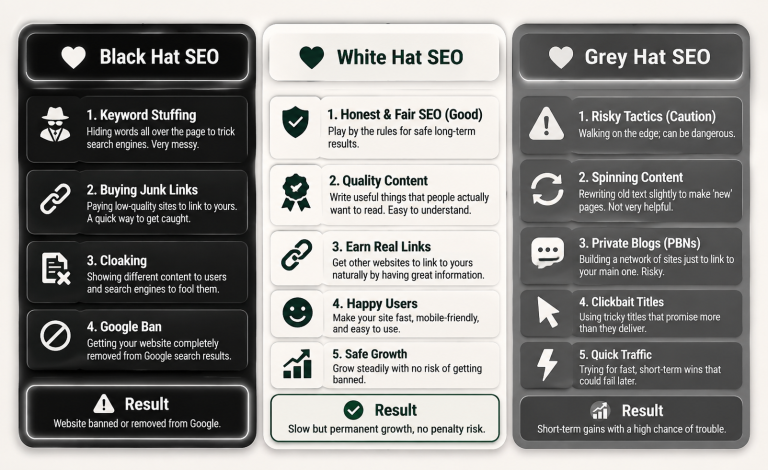
Black Hat SEO refers to the application of which is not allowed methods to manipulate the search engine results and achieve the desired results quickly. Such methods do not follow the guidelines of search engines and concentrate on achieving high positions by shortcuts instead of delivering quality content and experience to users.
Some of the practices of Black Hat SEO include keyword stuffing, cloaking, hidden text, duplicate content, paying for dubious backlinks, and employing automatic methods for link building. While such practices may provide temporary ranking success, they are capable of hurting a website in the long run.
Search engines like Google regularly enhance their algorithms to detect the activity of those employing unethical SEO techniques. Websites that utilize Black Hat SEO may lose their rankings or experience problems with visibility.
White Hat SEO
White Hat SEO denotes the implementation of ethical and authorized search engine optimization practices to enhance the visibility of a website and gain a higher ranking in organic search results. White Hat SEO ensures compliance with search engine rules while producing quality content and ensuring a good user experience.
White Hat SEO employs techniques such as keyword research, quality content creation, web page optimization, proper link building, mobile design, or optimizing the loading time of a website. All of these methods provide search engines with the necessary information about the website.
Unlike Black Hat SEO, White Hat SEO does not utilize any dishonest methods or unfair ranking practices. White Hat SEO concentrates on establishing credibility for the website and obtaining real visitors instead of relying on deception.
Grey Hat SEO
Grey Hat SEO denotes SEO tactics whose nature lies between the ethical attributions of White Hat SEO and the manipulative tactics of Black Hat SEO. This means their use is not necessarily forbidden by the guidelines set out by the respective search engines, yet they imply the use of risky techniques which may breach the policies of the search engines.
This form of SEO aims at the improvement of the ranking of web pages and online promotion with the help of means going beyond traditional forms and methods of SEO that allow for high-ranking. The techniques used for Grey Hat SEO are buying expired domains, creating several websites for backlinks purposes, purchasing guest posts explicitly for the ranking purposes, and creating new content from existing one.
Although these methods may help with quick ranking improvements, they are full of risks if they are detected by search engines and recognized to be manipulative.
SEO Approaches Comparison
The Tools and Strategies Behind SEO Success
Frequently Ask Question
SEO stands for Search Engine Optimization. This helps improve your website so it appears high up on search engines such as Google. This will help increase your organic traffic, reach potential customers, increase brand awareness and increase business opportunities.
SEO is a long term strategy. It can typically take between 3–6 months before you start seeing noticeable improvements depending on your websites condition, competition, keywords and how much you are optimizing.
DigitKraft offers fully comprehensive SEO services including on-page SEO, off-page SEO, technical SEO, keyword research, content optimization, backlink building and local SEO.
Yes! SEO will help your website appear to people actively looking for your products/services. You will receive more organic traffic that is relevant to your business giving you more opportunities to gain leads and conversions.
No SEO agencies can guarantee your rankings on Google. However DigitKraft use strategic SEO techniques to help improve your chances of increasing your websites rankings.