What Is Social Media Marketing?
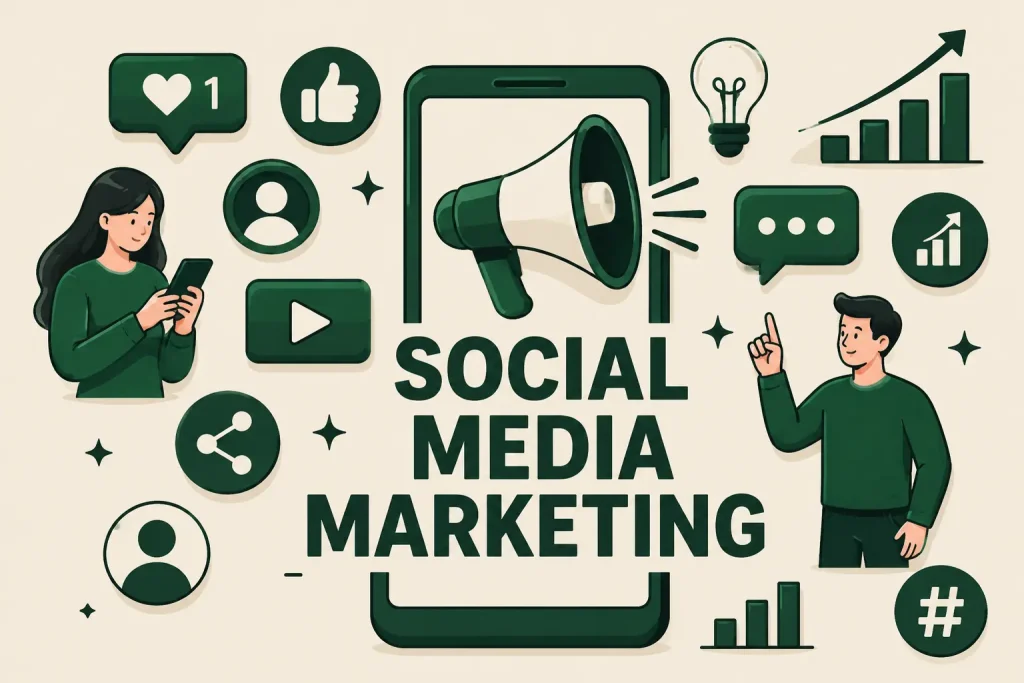
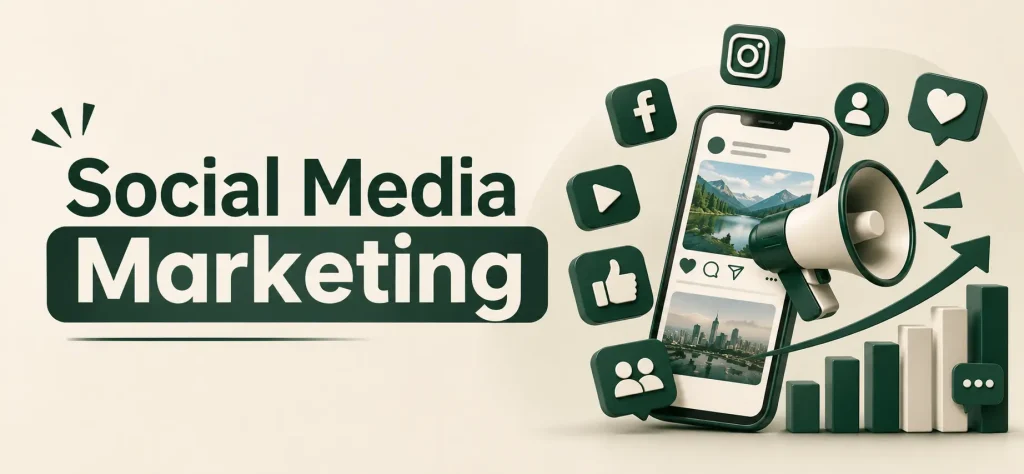
Social Media Marketing, often called SMM, means promoting your company, product or service via different social media platforms such as Instagram, Facebook, LinkedIn, YouTube, etc. It is a great communication method in which companies apply creativity to start interacting with the target audience. In social media marketing, it is important to generate meaningful content, be active and get acquainted with the latest trends and methods including advertisements and communication. Evaluating the efficiency of your strategy is one more important point in SMM.
Turn Your Brand Around Using Effective Social Media Marketing
Social media can help companies to reinforce their internet presence and get in touch with the audience. It requires developing creative ideas and techniques for social media which can help the platform user to receive certain goods or services. By using platforms such as Instagram, LinkedIn, Facebook, and YouTube, it is possible to utilize any of the Social Media Marketing options, which can help the company effectively enhance its advertising campaign. Social media marketing can also comprise services such as hashtag development and advertising.
Discover the Amazing Potential of Social Media Platforms for Your Business

1. Instagram (Visual Branding)
2. Facebook (Community & Ads)
3. YouTube (Video Marketing)
Goal: Showcase the goods and serves by means of pictures, reels, and stories.
Where to Apply: Great for businesses with to deal with fashion, food, tourism, and lifestyle.
Advantages: Create a solid identity of your brand, connect with your younger audience and expand via working with influencers.
Goal: Create a business account and find out your audience.
Where to Apply: Suitable for everyone with effective targeting of advertisement.
Advantages: Possible to send news, advertise products, receive feedback, and form a loyal audience.
Goal: To upload videos such as instructional video clips, product demonstration clips, etc.
Where to Apply: Best applicable for elaborative content and teach audience members.
Advantages: Build trust, enhance visibility, and position yourself as a brand authority.

4. LinkedIn (B2B Growth)
5. WhatsApp (Customer Engagement)
6. Twitter (Real-Time Updates)
Goal: Connect with professionals and promote business services.
Where to Apply: Perfect for B2B marketing and corporate branding efforts.
Adavantages: Generate leads, build trust, and broaden professional connections.
Goal: Communicate directly with customers through chat.
Where to Apply: Widely used in India for fast and personal interaction.
Advantages: Offer support, share updates, and foster meaningful relationships.
Goal: Share brief updates, news, and trending topics.
Where to Apply: Best for staying involved in real-time conversations.
Adavntages: Boost engagement, stay updated with trends, and instantly connect with your audience.
What Is Marketing?
Marketing is the practice of promoting, selling, and giving out goods and services to customers based on your understanding of their needs and wants. Marketing starts from finding who your customers are and involves coming up with ideas for promoting a brand, explaining how customers can benefit from products, building good relations with buyers, and making them buy. Marketing activities include market analysis, advertising, branding, determining prices, promotion of goods, designing texts, etc. Marketing tactics may vary in all cases, but generally include some traditional types of media advertising, web pages, social media, email marketing, search engines, etc.
There Are Two Types Of Marketing
What Is Organic Marketing?
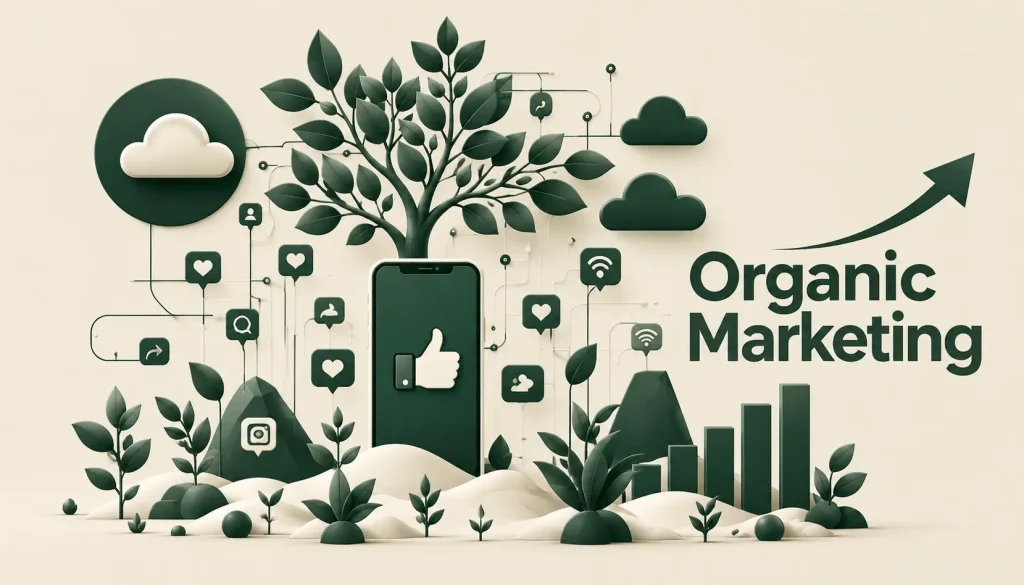
Organic Marketing is a way a business, brand, product or service is noticed by people without paying for advertisements. I believe Organic Marketing is about engaging and keeping people interested by providing them with helpful content, having a conversation with them and creating a proper relationship with your customers. Organic Marketing is creating content on social media, uploading short videos, writing blogs, using the correct hashtags, optimising pages on your website making them more discoverable on search engines and encouraging engagement from your followers. Website sites and social media platforms such as; Instagram, Facebook, LinkedIn, Google and YouTube are tools that can help your business reach customers in a more organic way.
Pros of Organic Marketing
Cons of Organic Marketing
– Cost-effective form of marketing.
– Creates trust among customers.
– Help create awareness about the brand.
– Increases audience engagement.
– Results take time to show.
– Consistency in content creation is required.
– Limited reach.
– High competition in social media.
What Is Paid Marketing?
Paid Marketing involves businesses spending money to promote their goods and services to the target audience via online ad platforms. Because of the need for businesses to be close to the target audience, the time it takes businesses to build their brand, increase their leads and boost sales, paid marketing has become a mainstream strategy in digital marketing. Paid Marketing encompasses various advertising formats including display ads, video marketing, social media marketing and Google Ads. To reach their audience, many businesses have found success with the various advertising options available on Instagram, Facebook, YouTube and Google. While there is no guarantee of success in digital marketing, the use of the right audience targeting and campaign optimization strategies help achieve success and boost the business’ bottom line.
Pros of Paid Marketing
Cons of Paid Marketing
– Ads can be created quickly and get results immediately.
– Allows for ad targeting.
– Leads to increased brand exposure.
– Leads to increase in sales.
– Recurring cost.
– Can be expensive.
– Results end when ads are stopped.
– Many competitors drive up ad costs.
The Power of Social Media in Modern Business
Frequently Ask Question
Social Media Marketing is the process of promoting a brand, product, or service through platforms like Instagram, Facebook, LinkedIn, and YouTube to increase brand awareness, engagement, and business growth.
It helps businesses reach their target audience, build brand awareness, connect with customers, generate leads, and increase sales.
Instagram, Facebook, LinkedIn, YouTube, and Pinterest are popular platforms. The best choice depends on your business goals and target audience.
Organic marketing focuses on natural reach through content and engagement, while paid marketing uses advertisements to reach targeted audiences.
Businesses should follow a consistent posting schedule based on their audience, platform, and content strategy. Quality and consistency matter more than posting frequently.