
SEO vs GEO: What’s the Difference?

Understanding the difference between SEO and GEO

With the rise of AI technology, people are beginning to search for information in different ways. Traditionally people would search information using search engines such as Google and Bing. However, with the rise of AI people are beginning to search for information in AI powered searches.

Currently, users can now search for information using technologies such as ChatGPT Search, Google AI Overviews, Google AI Mode and Microsoft Copilot.

As a result, Generative Engine Optimisation (GEO) has become a key consideration within digital marketing.

Where SEO looks to improve the visibility of your website in search results, GEO aims to improve the visibility and referencing of content within AI results.


However, it’s important to know whether GEO is replacing SEO, what the difference between these strategies are and what businesses should prioritise in 2026.

In this article we will identify the differences between SEO and GEO, understand how they can work, examine the benefits and understand how businesses can benefit from using both strategies to improve their online visibility.

What Is SEO (Search Engine Optimization)?

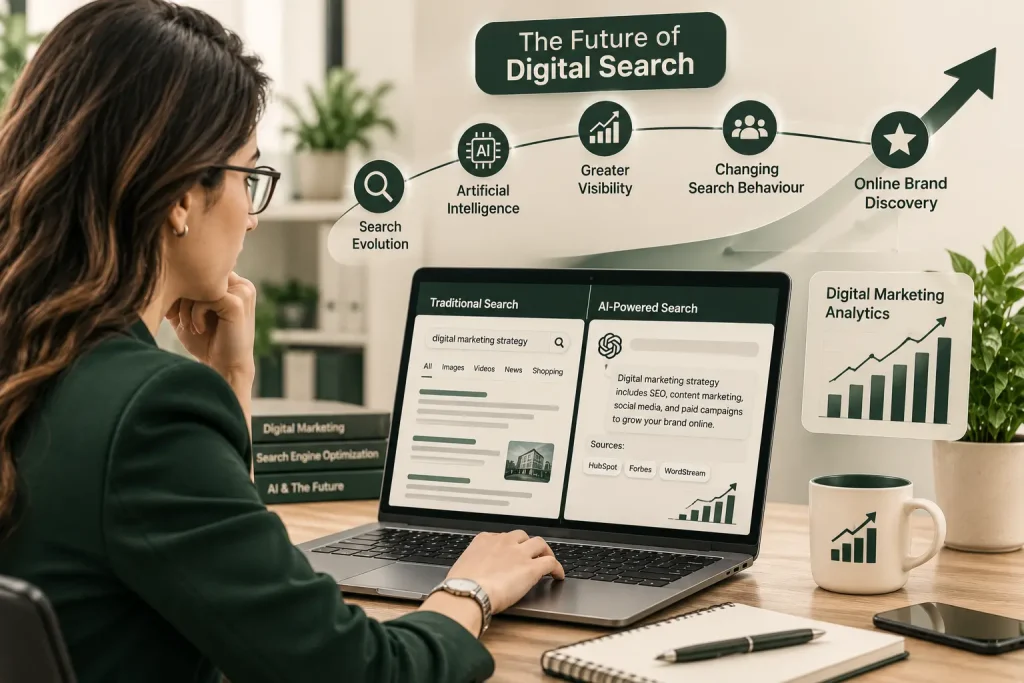
Digital marketing professional exploring the future of traditional and AI-powered search experiences.


Search Engine Optimisation (SEO) allows companies to appear in search results in an organic way so that relevant traffic is directed to your website.

As part of this, search engines will be able to understand the content of your website, determine how relevant it is for searches and display pages containing relevant information to users.

Therefore if someone searches ‘Best Digital Marketing Agency for small businesses’, the search engine (Google) will display websites relevant to the search.

Businesses will apply SEO tactics in order to increase their likelihood to be displayed in organic search results.

Key Elements of SEO

SEO involves several important activities that work together to improve website performance.

1. Keyword Research: Identifying relevant search terms and phrases that potential customers use to find information, products or services.

2. On-Page SEO: Optimizing page titles, meta descriptions, headings, URLs, content and internal links to improve relevance and usability.

3. Off-Page SEO: Building website credibility through relevant backlinks, brand mentions and other external signals.

4. Technical SEO: Improving website crawling, indexing, site structure, mobile usability and technical performance.

5. Content Optimization: Creating helpful, relevant and informative content that satisfies user search intent.

The main objective of SEO is to improve organic search visibility and connect businesses with people looking for relevant information.

What Is GEO (Generative Engine Optimization)?


Generative engine optimisation (or GEO) is optimising content on websites so that Generative AI search results can pick up, understand and include content from a site in order to answer search queries.

Where traditional search results deliver a list of links to websites, AI powered search results are able to give natural language answers by pulling together information from various sources.


For example if a user asks:

“Which digital marketing agency provides SEO, Google Ads and social media marketing services?”

AI may pull together information from several sites and give the user a natural language answer. In addition to this, the AI may include references to the sources it used.

GEO aims to make information from a brand useful, easy to access, relevant and easy to understand in AI discovery results.

However, it is not guaranteed that a website will be referenced in AI results.

Key Elements of GEO

Key aspects to include within GEO

1. Informative

Content should be informative in order to be of value to users.


2. Clear

Use clear section headers, concise paragraphs, definitions, bullet lists and relevant examples.


3. Authoritative

Ensure you have an authoritative brand by including accurate business information, authentic reviews, original research and relevant mentions within your content.


4. Relevant

Ensure that content can clearly explain topics and relate relevant services, concepts and requirements to customers.


5. Searchable

Ensure key content on the site is easily found by relevant search engines. Also ensure that technical SEO has been well implemented.

Overall, GEO aims to make valuable information on a site easier to find within AI searches, improving it’s chance for being referenced.

SEO vs GEO: What Is the Difference?

Visual comparison of SEO search rankings and GEO AI-generated answers with supporting website sources.


SEO and GEO both aim to improve online visibility, but they focus on different search experiences.

SEO primarily focuses on organic search engine results, whereas GEO considers how information can be discovered and referenced in AI-generated responses.

Here is a detailed comparison:

Comparison factorSEOGEO
Full formSearch Engine OptimizationGenerative Engine Optimization
Main focusOrganic search visibilityAI-generated answer visibility
Primary environmentTraditional search enginesGenerative AI search experiences
Content strategyRelevant and optimized website contentHelpful, contextual and trustworthy information
User experienceSearch results and website linksConversational answers and supporting sources
OptimizationKeywords, technical SEO, content and linksContent quality, context, credibility and accessibility
Performance measurementRankings, impressions, clicks and organic trafficAI mentions, citations, referral traffic and conversions
Main objectiveAttract relevant organic visitorsImprove opportunities for discovery in AI responses

Example: SEO vs GEO in Real Life

Say you are a Digital Marketing company and would like more people to find out about your SEO services.


Digital marketing professional analyzing keyword rankings, organic traffic and website SEO performance.


– Traditional SEO

Create content on your service with keywords in the title, headings, body, fast load speeds and internal linking. This will aid SEO visibility in search engines.

– GEO

Create high quality information for people to understand about SEO, including benefits, cost considerations, frequently asked questions and examples. Ensure you have correct business information. Build authority using relevant content on the web.

Make sure information is of good quality to help people find it in different ways (including AI search).

Either way, you can increase visibility and customers to your business.
How Does SEO Work?

SEO helps search engines to:

Find pages on websites

1. Crawl pages

2. Index pages

3. Rank pages according to relevance


1. Crawling

The search engine finds web pages by following links.


2. Indexing

Search engines will process and store suitable information from web pages in order to be able to provide relevant results.


3. Ranking

When performing a search, a search engine will rank pages based on several factors to give users the most relevant and useful results.


4. Organic Search Results

As a result of ranking, users may be directed to relevant web pages and be able to view the information available within these pages.

If a client searches “social media marketing services,” then a well optimised website from an agency may appear in organic search results.

How Does GEO Work?

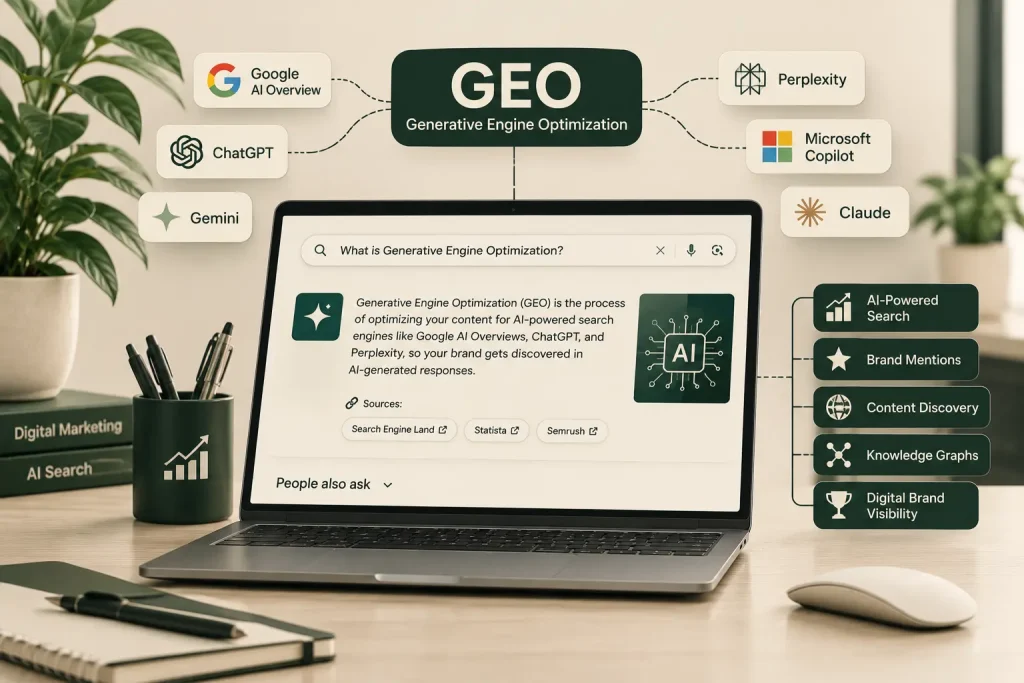
Generative Engine Optimization concept showing AI-generated answers, website citations and online brand visibility.


What is GEO?

GEO improves the visibility and usefulness of information within AI search tools.

Different AI tools will have different methods of searching, sorting and providing answers. 

In summary, the steps involved could be:

1. Finding information

Searches for relevant information from within available resources on the web, indexes and other sources.

2. Retrieving information

Retrieves information which may be useful to answer the question.

3. Understanding information

Analyzes information to understand it and how it relates to other information.

4. Providing an answer

Uses the relevant information to provide a conversational answer to the question.

5. Citing sources

Within certain AI tools, sources may be listed, cited or linked within the answer.

An example could be if someone asked what the benefits of SEO are for small businesses. Within AI search results, information would be gathered from multiple marketing websites. From this information, a concise answer may be given.

Therefore, accurate, relevant and well structured content on websites is valuable.

Why Is GEO Becoming Important Alongside SEO?

Why is GEO important?

With people now being able to search for information and compare services in new ways with AI, businesses need to be aware of how this may affect their visibility within searches.


5 Reasons Why GEO Matters-

1. Improved Search Queries

As queries are becoming more conversational, people will be asking more specific questions.

Instead of ‘SEO services,’, people may search:

“How can a small business improve its Google rankings without spending too much money?”

Businesses can create content to answer these specific questions to help provide value to the customer.


2. Increased Visibility For Brands

As people search in new ways using AI, they may come across new websites and businesses based on the AI-generated responses and references.

This means there are more opportunities for your brands to be found by customers.


3. Improves Brand Trust

GEO means that businesses must ensure that they give accurate information, unique insight and consistent brand information.

This can help to improve high-quality content and trustworthy brands.


4. Reach Customers On Different Search Platforms

Customers may interact with Google Search, AI-Search tools and voice assistants at different points in the buyer journey.

If businesses have useful and easily accessible information on their website, they can effectively reach these customers depending on what search method they are using.


5. Adapting To Future Digital Marketing

As search methods evolve AI discovery is becoming an increasingly significant aspect of digital marketing.

Businesses who have good SEO, useful content and trustworthy brand information will adapt better to changing search methods.

Top 7 SEO Strategies for Better Organic Search Visibility

Top 7 SEO Strategies for Better Organic Search Visibility-

Ensure that you optimise your site with SEO.

Tactics to consider

1. Use keywords

Research what words or phrases your ideal audience would be using to search for your product/service.

Include appropriate keywords in the title, heading, URL and content.


2. On-page optimisation

Optimise title, meta description, headings, alternative text and internal links.

Ensure that each page is focused on one topic, and relevant.


3. Quality content

Ensure that your content is original, valuable and meets the searchers’ intent.

Avoid producing pages just for keyword stuffing and avoid targeting several similar keywords without providing any real value.


4. Technical Optimisation

Ensure that the website is crawlable by search engines, mobile friendly, secure and provides an easy to use experience.

Ensure that there are no broken links, and issues with indexing, duplicate content or unnecessary redirects.


5. Inbound Links

Create inbound links from reliable websites. Ensure that this is done by creating original research, valuable resources, contributing to the industry and building genuine relationships.


6. Optimise performance

Ensure that the website loads quickly, images aren’t too large, mobile friendly and provides a good experience on the page.


7. Measure SEO

Using Google Search Console and analysis tools ensure that we can measure impressions, clicks, traffic, what people have searched for and conversions.

Top 7 GEO Strategies for Better AI Search Visibility

Top 7 GEO Strategies for Better AI Search Visibility

Here are 7 best practices for optimal visibility in AI search results.

1. Provide Useful Information

Provide useful information.

Include practical examples, observations within the industry, original research and clear explanations.


2. Answer Questions

Include titles based on common questions. Include short answers in the following paragraph(s).

For example:

What is the difference between SEO and GEO?

Whilst SEO improves visibility in natural search results, GEO improves visibility, and possible citation, in AI generated results.


3. Structure the Information

Make use of descriptive sub-headers (H2, H3), bullet points, comparison tables and short paragraphs.

Well structured content makes it easier for both people and search engines to understand.


4. Provide Accurate Business Information

Ensure that key business information such as name, services provided, contact details and other relevant details are consistent across your website and credible business listings.


5. Reference Reliable Information

Include references to official documentation, reliable research within the industry, or external sources to support key statements.

Avoid using statistics or statements without supporting evidence.


6. Ensure Technically Accessible

Ensure that key content on your website is accessible to relevant search engines.

Have a clear structure on your website. Provide useful internal links. Have up-to-date site maps.


7. Monitor AI Visibility

Monitor performance in AI search results. Record referral traffic, mentions of brand, citations and business inquiries.

As AI search results may differ between searches, do not consider individual searches as a true representation of how well you are ranked.

Can SEO and GEO Work Together?

Yes.

Traditional SEO benefits websites by improving discoverability, content indexing, relevance and performance in natural search.

GEO works well in addition to traditional SEO to improve discoverability and referencing of useful content within generative AI.


Within an educational piece about digital marketing, businesses can perform the following:

– Keyword research to find relevant search queries.

– Optimise content for natural search.

– Structure content with clear subheadings.

– Direct answers to common questions.

– Credible references and unique insight.

– Ensure content is easy to understand.

– Monitor natural and AI traffic.

By doing this, businesses are creating useful content so users can benefit regardless of the type of search they undertake.

Best Tools for SEO and GEO Optimization

Tools

1. Google Search Console

Monitor your site’s performance in organic search, identify any issues with indexing, see what search terms you are being found by and how visible your website is.


2. Google Analytics 4

See what traffic your website is getting, what users are doing on it, where they came from and conversion rates.


3. Semrush

Perform keyword research, competitor analysis, backlink analysis, and audit your website.


4. Ahrefs

Analyse backlinks, perform keyword research, competitor research and find content opportunities.


5. Screaming Frog SEO Spider

Identify technical issues with your site, broken links, duplicated meta tags and crawl issues.


6. ChatGPT

Get ideas on content, outline content and research questions that customers may have. Improve clarity of content.


7. Google Gemini

Research information, create content, get ideas and plan marketing.


8. Bing Webmaster Tools

See how your site is performing in crawling, indexing and Bing and other AI powered searches.

While none of these tools guarantee rankings in SEO or citations in GEO, they are useful tools in researching, implementing and measuring.

Common SEO and GEO Mistakes Businesses Should Avoid

Avoid these mistakes within your SEO/GEO strategies.

1. Duplicate Keywords

Creating content with many repeated keywords will be confusing for readers.


2. Generic Content

If you simply copy and paste information from elsewhere without providing any useful new insights, you won’t be creating any real value.


3. Ignoring Technical SEO

Important content should be easy to find by the search engines.


4. Creating Fake Links and Mentions

Creating fake links and misleading reviews won’t help to create trustworthy content.


5. Not Considering Intention

Content should address the problems/ questions of your target customers.


6. Guaranteed Results

With SEO and GEO there cannot be guaranteed results. So it is impossible to guarantee higher search engine rankings, more traffic, AI citations or mentions.


7. Not Refreshing Content

Ensure that previous content is reviewed frequently to ensure that it is not out-of-date. This will also mean that the content is more valuable.

SEO vs GEO: Which Strategy Should Businesses Choose?

Best approach:

Both approaches should be used in combination.

If you want to improve your visibility within Google searches, consider:

– Keyword optimisation

– On-page SEO

– Informative content

– Backlinks

If you want to improve your visibility within AI searches, consider:

– Unique information

– Easy-to-understand information

– Established credibility

– Technical accessibility

In order to create an effective digital marketing strategy, aim to:

– Have good SEO

– Provide useful and unique content

– Provide clear answers to customer queries

– Ensure consistent brand information

– Ensure technical accessibility

– Include relevant internal and external links

– And regularly monitor results.

– Best strategy

Ensure that people can easily find reliable information, and that they can find you easily.

How DigitKraft Helps Businesses Improve Their Online Visibility

SERVICESWe bring creative, strategic and technical solutions to digital marketing.

With the changes taking place within digital search, it is important that we apply digital marketing strategies that will help your brand and audience, and improve growth.

We can help improve your online presence so that you can effectively engage with your target audience.


Digital Marketing- 

1. SEO

We optimise websites, identify appropriate keywords, make content improvements and apply technical SEO to improve organic visibility.

2. Content Marketing

We deliver engaging and informative content to communicate knowledge and help your desired audience.

3. Social Media Marketing

We produce social media strategies to increase brand recognition, effectively engage audiences and communicate with businesses.

4. Google Ads

We create targeted campaigns to allow you to effectively reach the right audience.

5. Email Marketing

With strategic email marketing, we can engage customers.

6. CMS Development

We can develop and manage websites to allow you to meet your digital marketing goals.

What we offer

We create valuable digital experiences for businesses to adapt to changes in digital discoverability.

Improve your online presence

Get in touch with us to find digital marketing solutions to help achieve your business goals.

Conclusion

SEO and GEO are both very valuable concepts within digital marketing.

Where SEO aims to increase the visibility of web content within organic search results, GEO aims to make web content more discoverable and referenceable within AI search results.


Both SEO and GEO have many similarities, including high quality, clear information, technical accessibility and user centricity.

Although they are different techniques, businesses should consider implementing both SEO and GEO to provide better adaptability to changes in search.

When AI powered search evolves, businesses which provide high quality, trustworthy information with added value to customers will be best placed to adapt.


Create an intelligent digital presence with DigitKraft.

Frequently Asked Questions

No. GEO is not replacing SEO. Traditional SEO remains an important foundation for website crawling, indexing, content quality and search visibility across many AI-powered search experiences.

Neither is universally better. SEO is important for traditional organic search visibility, while GEO addresses discoverability in generative AI search experiences. Businesses can benefit from combining both approaches.

Create original content, conduct keyword research, answer customer questions, improve technical SEO, organize information clearly and maintain consistent brand details across credible online sources.

Yes. Small businesses can use GEO-related content practices to improve the quality and discoverability of their online information while continuing to invest in traditional SEO.

There is no fixed timeline. SEO performance depends on factors such as competition, website quality, content and technical health. AI search visibility is also variable and does not follow a guaranteed timeline.

Leave a Comment

Your email address will not be published. Required fields are marked *

Scroll to Top